
Ukrainian Drones Strike Yandex Data Centers in Strategic AI Escalation
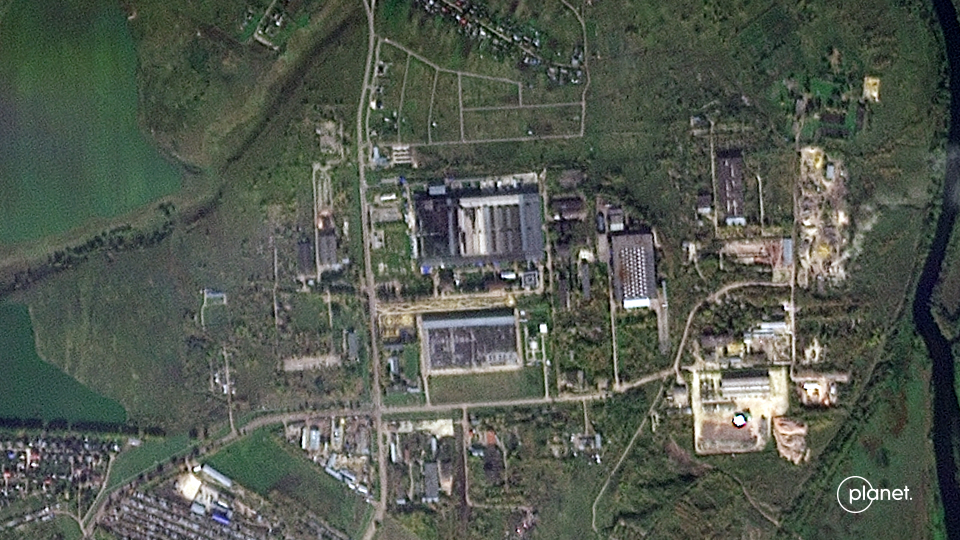
Ukrainian long-range drone operations have struck and knocked out two of five primary data centers operated by Yandex, the Russian technology conglomerate frequently described as the country's domestic equivalent to Google. The coordinated strikes, executed in early October, directly impacted facilities in the Sasovo and Kaluga regions, leaving the company struggling to maintain its proprietary AI chatbot, search functions, and associated cloud applications. The offensive represents a calculated shift in military targeting toward high-value computational infrastructure, moving the theater of conflict deep into the technological backbone of the Russian digital economy.
The military actions were executed on October 8 and October 9, specifically targeting physical infrastructure housing critical hardware. According to international reports and confirmation from domestic tech channels, the facility in Kaluga—Yandex's largest data center operation—was struck by FP-1 one-way attack drones manufactured by the Ukrainian enterprise Firepoint. The earlier strike in Sasovo specifically impacted infrastructure housing two of the company's three high-performance supercomputers, which are essential for training the proprietary YandexGPT artificial intelligence models. While corporate representatives confirmed that no personnel were injured during the blasts, Russian users immediately experienced cascading disruptions across popular applications, including digital banking platforms, media streaming services, and state-operated transit portals.
President Volodymyr Zelenskyy publicly acknowledged the operation through official channels, framing the strategy as a direct and precise measure to counter ongoing Russian aerial campaigns targeting critical Ukrainian telecommunications and data infrastructure. Since late September, persistent Russian drone strikes have battered Ukraine's digital architecture, causing widespread outages for mobile and internet services among the civilian population. By retaliating against high-profile commercial and computational assets, Kyiv is demonstrating an expanding capability to impose economic and operational costs within Russian territory, effectively introducing digital sovereignty and data dependency into the calculus of modern interstate conflict.
Key Developments & Policy Breakdown - Targeted Facilities: Ukrainian drone strikes successfully disabled two out of five primary data centers operated by Yandex, located in the Sasovo and Kaluga regions of Russia. - Timeline of Attacks: The coordinated strikes occurred on October 8 and October 9, directly following a series of Russian aerial campaigns against Ukrainian data infrastructure in late September. - Technological Impact: The Sasovo facility housed two of Yandex's three primary supercomputers utilized for training the company's flagship YandexGPT artificial intelligence architecture. - Hardware Verification: Ukrainian manufacturer Firepoint confirmed the deployment of its FP-1 one-way attack drones in the strike targeting the Kaluga facility, Yandex's largest computational hub. - Collateral Digital Disruption: Russian consumers faced widespread outages across multiple sectors, including the T-Bank digital banking platform, the Ivi video streaming service, Russian Railways, and various commercial e-commerce and real estate aggregators. - Official Attribution: Ukrainian President Volodymyr Zelenskyy confirmed the operation via social media, explicitly framing the action as a precise, symmetrical response to infrastructure attacks orchestrated by Moscow.
In-Depth Analysis & Real-World Impact
The disablement of critical domestic compute infrastructure exposes the extreme vulnerability of centralized technological ecosystems during wartime. Yandex serves as the digital adhesive for the Russian economy, processing everything from routine web searches and logistics to financial transactions and consumer verification services. When core servers in Kaluga and Sasovo went offline, the ripple effects were immediately felt by millions of everyday consumers who rely on the ecosystem for transit ticketing, banking, and media consumption. This strategic targeting highlights a grim evolution in modern warfare: civilian digital infrastructure, once considered peripheral to active combat zones, has become a primary lever for economic disruption and psychological pressure.
For the Russian technology sector, the loss of specialized hardware, particularly advanced GPUs and supercomputing arrays crucial for large language model development, poses severe long-term developmental challenges. Amid strict international sanctions that restrict direct procurement of high-end semiconductor components, replacing specialized computing clusters is exceptionally difficult. Consequently, the strikes not only degrade immediate operational uptime but also permanently stunt the domestic artificial intelligence ambitions of Russia's premier tech champion. Competitors and market stakeholders are now forced to reevaluate the physical security of their server architecture, recognizing that geographic dispersion and redundancy are no longer guarantees against modern asymmetric threats.
Background, Preceding Events & Historical Context
Targeting digital infrastructure is an escalating trend that has redefined global conflict throughout 2026. Earlier in the year, geopolitical flashpoints in the Middle East saw Iranian drone operations successfully disable multiple Amazon Web Services data centers located in Bahrain and the United Arab Emirates, demonstrating that cloud infrastructure and hyperscale computing hubs are viewed globally as strategic choke points. These developments build upon a foundation of relentless physical destruction inside Ukraine since the initiation of Russia's full-scale invasion in February 2022, during which Russian missile and drone campaigns systematically targeted Ukraine's power grids, heating plants, and civilian communications networks.
As the conflict has ground on, Ukraine has systematically expanded its asymmetric response capabilities. Facing severe shortages of advanced Western-supplied interceptor missiles for air defense, the Ukrainian military has heavily invested in indigenous medium-range and long-range drone manufacturing. Throughout the summer of 2026, these expanding drone fleets targeted military logistics, oil refineries, and naval shipping lanes in the Black Sea and Sea of Azov, alongside commercial warehouses belonging to major Russian e-commerce giants such as Wildberries and Ozon. The inclusion of Yandex in this targeting matrix signifies a logical progression toward crippling the financial and technological enablers of the Russian state.
“"We continue to respond to Russia’s attacks on Ukraine, and we’re doing so with high precision. Another data center was hit as well—our symmetrical response." — Ukrainian President Volodymyr Zelenskyy”
Strategic Outlook & What to Watch Next
In the coming weeks, analysts will closely monitor Yandex’s recovery timeline and the resilience of Russia's broader digital infrastructure. Restoring proprietary AI training models requires immense computational power and continuous electrical stability, both of which are currently constrained by ongoing security threats and material shortages. Furthermore, the willingness of Ukrainian forces to strike high-profile commercial tech assets signals that corporate entities previously insulated from the frontline can no longer rely on commercial status for protection. Observers should watch for potential retaliatory escalations against international cloud providers or further kinetic targeting of regional logistics hubs, as both sides increasingly weaponize the digital and physical architecture of the modern information economy.
Quik News synthesizes verified facts across international press reporting. Original reporting belongs to the attributed outlets above.