
Trump Rejects AI Development Pauses, Citing Strategic Competition With China
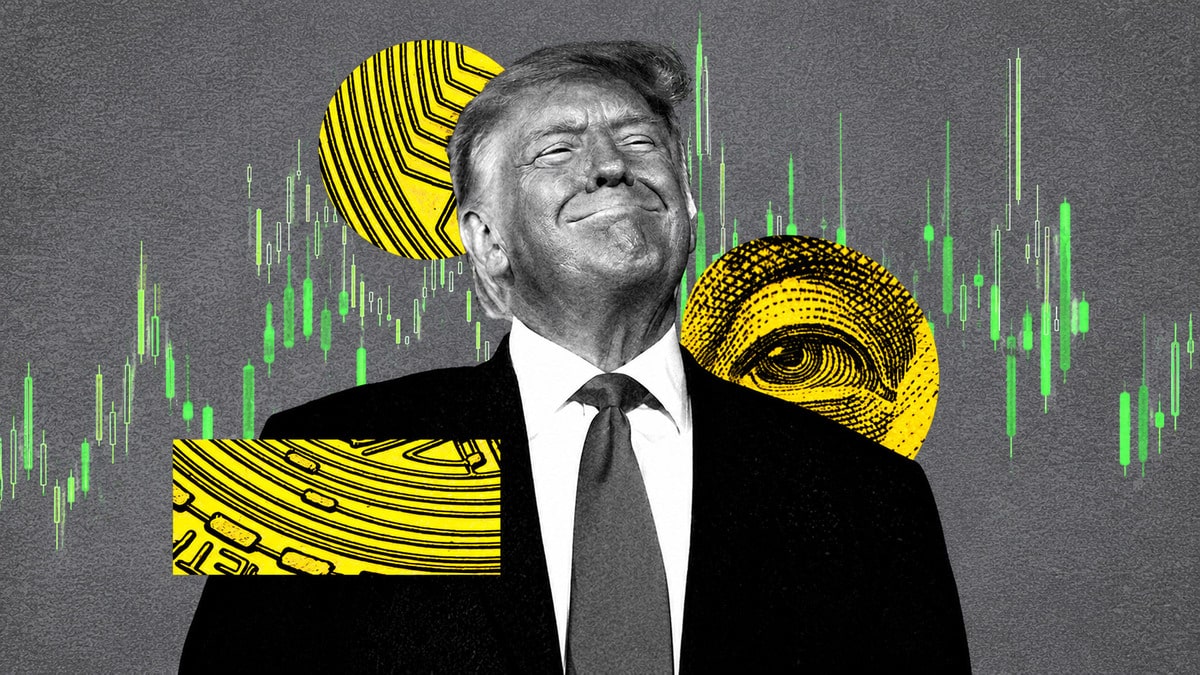
US President Donald Trump has officially dismissed calls from safety advocates and prominent tech figures to slow the pace of frontier artificial intelligence development. Speaking against the backdrop of an accelerating technological rivalry with Beijing, Trump asserted that any self-imposed deceleration by American laboratories would amount to a strategic surrender, allowing China to seize the lead in critical computing capabilities.
The decision firmly aligns the White House with industry factions prioritizing rapid capability scaling over precautionary regulatory pauses. For months, policy groups, ethicists, and select silicon valley leaders had advocated for federal oversight to evaluate risks associated with human-level intelligence, systemic cybersecurity vulnerabilities, and autonomous systems. Trump’s position effectively shuts the door on broad domestic moratoriums, framing speed and technological scale as vital national security imperatives.
The policy stance establishes a clear doctrine for the administration: the primary threat to national stability is not the rapid development of advanced computing systems, but the risk of being outpaced by foreign rivals. This posture is expected to reshape federal agency priorities, redirecting regulatory attention away from restrictive compliance frameworks and toward the aggressive expansion of domestic energy grids, data center permits, and semiconductor manufacturing.
Key Developments & Policy Breakdown
- Explicit Rejection of Pauses: The White House explicitly rejected proposals for mandatory cool-down periods or safety-driven caps on model training compute.
- National Security Prioritization: AI capability acceleration is formally classified as a primary pillar of US defense strategy to counter Chinese technological advancement.
- Deregulation Directive: Federal agencies have been instructed to identify and eliminate regulatory bottlenecks impeding data center construction and energy generation.
- Export Control Continuity: The administration plans to maintain and reinforce strict controls on high-end hardware exports, including advanced GPUs, to limit Beijing's access to silicon.
- Shift from Federal Oversight: Plans for comprehensive safety frameworks are being rolled back in favor of lightweight, market-driven standards paired with targeted defense procurement.
In-Depth Analysis & Real-World Impact
By rejecting calls for artificial intelligence guardrails, the administration provides structural certainty to major technology firms and venture capital funds investing hundreds of billions of dollars into next-generation infrastructure. Companies building multi-gigawatt data center clusters can now proceed without the threat of sudden federal interventions or mandatory training halts. This regulatory clarity is likely to accelerate capital expenditure across silicon manufacturing, energy production, and physical data center construction.
However, the move sharpens the rift between Washington and international allies, particularly in Europe. The European Union has moved aggressively to enforce its comprehensive AI Act, which imposes strict compliance burdens on high-risk models. American technology firms operating under a deregulated domestic regime may find themselves operating under starkly different parameters overseas, creating potential compliance friction and trade disputes over cross-border data flows and model deployment.
From a security perspective, the stance doubles down on the assumption that hardware dominance and rapid iteration are the only effective defenses against adversarial capabilities. While this benefits domestic hardware producers and cloud providers, safety researchers caution that removing precautionary checkpoints increases systemic vulnerabilities. Without standardized pre-deployment testing, the risk of deploying models with unforeseen software flaws or exploitable security gaps escalates dramatically.
Background, Preceding Events & Historical Context
The debate over artificial intelligence policy gained global momentum following the rapid public deployment of large language models in late 2022. Early policy responses focused heavily on safety alignment, culminated in international safety summits in Bletchley Park and Seoul, where world leaders discussed potential risks of catastrophic failure. Simultaneously, several high-profile AI researchers signed open letters calling for a pause on training systems more powerful than existing state-of-the-art models.
Parallel to the safety debate, the geopolitical tension surrounding advanced microelectronics escalated. Previous administrative actions relied heavily on Commerce Department export controls to restrict Chinese access to cutting-edge chips produced by Nvidia and TSMC. Despite these restrictions, Chinese tech giants like Huawei, Alibaba, and Baidu demonstrated significant progress using localized hardware optimizations and open-source architectures, fueling fears in Washington that export controls alone were insufficient to maintain the American lead.
“"Imposing artificial speed limits on domestic innovation does not pause foreign ambition; it merely transfers the competitive high ground to Beijing." — Senior White House Technology Advisor”
Strategic Outlook & What to Watch Next
In the coming months, industry observers should monitor executive actions aimed at expediting domestic energy production. The primary bottleneck for model scaling has shifted from algorithmic breakthroughs to raw electrical capacity. The administration is expected to work directly with energy regulators and utility operators to fast-track approvals for natural gas, nuclear, and renewable installations dedicated specifically to powering hyper-scale data centers.
Additionally, the policy shift will test the resilience of international coalitions focused on technology governance. Watch for how the US Department of Commerce handles export enforcement and whether Beijing responds with targeted retaliatory measures on critical raw materials, such as gallium and germanium. The operational posture of the US tech sector is now clear: maximum speed, structural expansion, and complete reliance on market forces to maintain global dominance.
Quik News synthesizes verified facts across international press reporting. Original reporting belongs to the attributed outlets above.


