Pakistan Weighs Fuel Austerity Revival as Middle East Hostilities Escalate

The Pakistani government is preparing to reinstate public sector austerity protocols and fuel conservation measures as escalating geopolitical instability in the Middle East threatens international energy supply chains and drives up domestic fuel prices. Information Minister Ataullah Tarar confirmed that Prime Minister Shehbaz Sharif has ordered high-level cabinet consultations to review previously deployed conservation drives and determine which measures must be brought back into force.
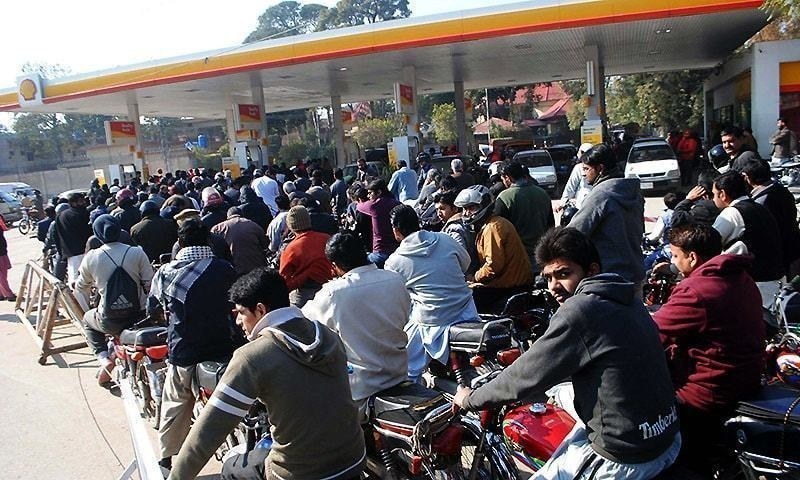
Addressing a joint press conference alongside Information Technology Minister Shaza Fatima Khawaja and Petroleum Minister Ali Pervaiz Malik, Tarar noted that while selected interventions—such as regulated commercial market operating hours—remain active, broader policy tools are undergoing review. The policy deliberations follow the immediate launch of a targeted fuel relief program aimed at insulating low-income commuters, including operators of motorcycles, rickshaws, and small-capacity passenger vehicles, from mounting petrol costs.
The global energy bottleneck stems from military hostilities along primary maritime transport corridors, specifically the Strait of Hormuz and the Bab al-Mandab strait, where regional conflict and armed rebel attacks have disrupted petroleum tanker movements. With domestic petrol prices standing at Rs375.82 per litre and high-speed diesel reaching Rs403.32 per litre, the federal administration faces a complex operational challenge to balance fiscal discipline with public economic stability.
Key Developments & Policy Breakdown
- Re-evaluation of Conservation Protocols: Federal authorities are reviewing austerity measures previously enforced between March 9 and June 19, which featured a 50 percent reduction in official fuel allowances for government vehicles, executive salary cuts for lawmakers, and partial work-from-home mandates across state institutions.
- Targeted Fuel Relief Allocation: The Ministry of Finance has committed an estimated Rs25 billion per month to fund a direct subsidy scheme, offering Rs100 per litre in targeted relief to users of motorcycles, rickshaws, Qingqis, and personal vehicles with engine capacities up to 800cc.
- Inter-Provincial Governance Framework: A central steering committee incorporating the chief secretaries of all four provinces, Azad Jammu and Kashmir (AJK), and Gilgit-Baltistan has been mobilized, supported by a central "war room" and monitoring call center to track relief distribution and maintain price stability.
- Refinery Supply Management: Petroleum Minister Ali Pervaiz Malik conducted emergency alignment sessions with private domestic oil refiners to establish operational buffers for September and October, hedging against potential long-term disruptions across Red Sea shipping lanes.
- Strategic Reserves Framework: Prime Minister Sharif is supervising ongoing efforts to expand bonded storage schemes and formalize strategic petroleum reserves to mitigate import vulnerabilities.
In-Depth Analysis & Real-World Impact
The decision to re-evaluate structural austerity reflects the macroeconomic pressure facing Pakistan's energy import pipeline. By absorbing consumer fuel costs through targeted relief programs while procuring imported crude under elevated international spot rates, the federal treasury risks broadening its fiscal deficit unless administrative overheads are curtailed. The commitment of Rs25 billion monthly for the targeted subsidy places significant demand on the Ministry of Finance, necessitating administrative spending cuts to avoid secondary deficit expansion.
For logistical services, freight transporters, and private commuters, soaring fuel prices—driven by high-speed diesel at Rs403.32 per litre—directly threaten to trigger broader cost increases across fundamental consumer commodities. Although Deputy Prime Minister and Foreign Minister Ishaq Dar has been tasked with overseeing regional enforcement to prevent unauthorized transport fare hikes, execution across decentralized provincial transit markets remains complex. The success of the intervention relies heavily on whether the targeted Rs100 per litre price reduction can cushion lower-income transport operators without creating informal resale channels or market distortions.
Background, Preceding Events & Historical Context
Pakistan's energy market vulnerability stems from trade blockades across critical Middle Eastern shipping channels. Continued confrontation involving the United States and Iran has raised risks along the Strait of Hormuz, while ongoing Houthi actions against merchant ships in the Bab al-Mandab strait have compromised a primary sea route for Saudi oil exports. This severe disruption along global trade routes has elevated international freight and insurance costs, translating into sudden price shocks for net-energy-importing South Asian states.
Initial emergency conservation measures were introduced on March 9 when international oil prices spiked following early geopolitical shifts in the region. During that phase, federal officials executed mandatory salary reductions for public sector leaders, reduced fuel quotas for state departments, and limited office operations. While the majority of those curbs were formally wound down on June 19 following temporary market normalization, mandatory market closing times remained intact. The recent escalation of Middle Eastern hostilities has forced policymakers to accept that ad-hoc adjustments must give way to long-term contingency planning.
“"Managing a Rs25 billion monthly fuel relief allocation while global oil supply lines face persistent maritime threats requires immediate administrative spending cuts across state institutions to ensure fiscal containment."”
Strategic Outlook & What to Watch Next
Over the coming weeks, the prime minister's cabinet will finalize the exact portfolio of austerity tools to be reactivated. Observers will monitor whether public departments transition back to hybrid working models, as well as the magnitude of fuel quota reductions applied to official fleets. Furthermore, the administrative capability of the newly established central war room and provincial steering committees will dictate whether public transit operators maintain baseline fare structures or pass elevated fuel expenditures onto commuters.
On the supply management side, the outcome of the Petroleum Ministry's discussions with private oil refiners regarding bonded storage capabilities and strategic reserves will serve as an indicator of national energy buffer capacity. Should shipping disruptions in the Red Sea and Persian Gulf persist through the final quarter of the year, Pakistan's reliance on spot market import contracts will test the fiscal limits of the Ministry of Finance, potentially requiring changes to the national petroleum levy or adjustments to retail fuel pricing formulas.
Quik News synthesizes verified facts across international press reporting. Original reporting belongs to the attributed outlets above.