NIO Sells 30% Stake in Battery Swap Unit to Geely in $2.4B Deal
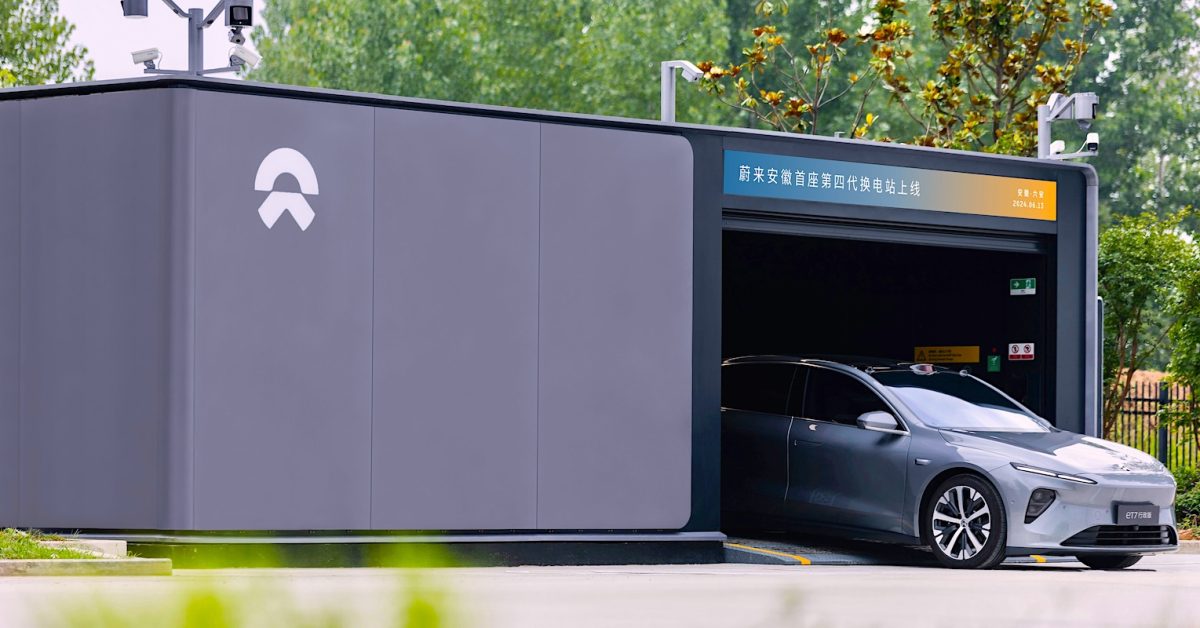
Electric vehicle manufacturer NIO has executed definitive agreements to transfer a 30% equity stake in its NIO Power subsidiary to a subsidiary of Zhejiang Geely Holding Group, valuing the unit at approximately RMB16 billion, or $2.4 billion. The transaction represents a significant consolidation within China's nascent battery-swapping ecosystem, moving the technology from an exclusive proprietary model toward a shared, industry-wide standard. Under the terms of the accord, the consideration is structured primarily through asset contributions rather than a straight cash buyout. Geely is folding its existing commercial battery swap business—known as Yiyi—into NIO Power, supplemented by an RMB640 million ($94 million) cash injection. In a parallel cross-investment structure, NIO China is simultaneously acquiring a 10% equity stake in Zhejiang Haohan Energy Technology, Geely's dedicated EV charging business, effectively executing a strategic asset swap that intertwines the infrastructure footprints of both automotive giants.
This agreement transforms a prior non-binding memorandum of understanding signed in November 2023 into a concrete operational partnership. By pooling resources, NIO and Geely aim to establish dominant standardized protocols for both private passenger vehicles and commercial fleets. The deal comes at a time when NIO Power has achieved massive scale, operating nearly 3,800 swap stations globally and having surpassed the milestone of 100 million cumulative battery swaps earlier this year. However, the immense capital expenditure required to construct and maintain this heavy infrastructure has historically pressured NIO’s balance sheet, prompting management to actively court external institutional and corporate capital to distribute the financial burden.
Key Developments & Policy Breakdown - Valuation and Equity Split: Geely acquires a 30% stake in NIO Power based on a post-money valuation of RMB16 billion ($2.4 billion), with the equity value of the 30% share calculated at approximately RMB4.8 billion. - Asset-Based Consideration: The transaction is non-cash heavy; Geely contributes its commercial battery-swap subsidiary (Yiyi) and RMB640 million ($94 million) in cash, while Yiyi’s baseline valuation is pegged at roughly RMB4.1 billion ($610 million) backed by performance milestone clauses. - Reciprocal Investment: NIO China subscribes to newly issued shares in Zhejiang Haohan Energy Technology, securing a 10% stake in Geely’s charging arm in exchange for transferring portions of NIO's internal charging assets. - Regulatory Hurdles: Both foundational transactions remain subject to mandatory regulatory approvals by Chinese authorities before final closing. - Network Scale: As of early 2026, NIO operates 3,790 swap stations, having set a daily record of 175,976 swaps, underpinning its signature Battery-as-a-Service (BaaS) commercial model. - Capital History: The deal follows earlier external financing rounds for NIO Power, including a RMB1.5 billion injection led by the Wuhan Guangchuang fund in May 2024 and an anticipated RMB2.5 billion investment from battery giant CATL initiated in early 2025.
In-Depth Analysis & Real-World Impact The consolidation of NIO Power and Geely's Yiyi unit serves as a critical inflection point for China's electric vehicle market, which is rapidly bifurcating into distinct infrastructure camps. Currently, the market is divided between NIO’s automated swap network, CATL’s burgeoning Choco-Swap ecosystem, and rival automakers like BYD that heavily champion ultra-fast plug-in charging architectures. By integrating Geely—parent to Volvo Cars, Polestar, Zeekr, and Lynk & Co—into the fold, NIO has successfully enlisted a heavyweight manufacturing partner capable of driving massive production volumes of swap-compatible consumer and commercial models. If Geely-affiliated brands begin rolling out vehicles equipped with NIO-standard swappable batteries at scale, the ecosystem risks becoming the de facto industry standard across the world's largest automotive market.
From a financial perspective, the transaction relieves NIO of sole infrastructural stewardship while safeguarding its strategic vision. NIO is navigating a complex financial recovery, evidenced by its Q2 2026 delivery of 107,658 vehicles, an 18.5% vehicle margin, and a modest non-GAAP profit alongside a RMB528 million GAAP net loss. Maintaining RMB56.7 billion in cash reserves at the end of June positions the company comfortably, yet offloading the staggering capital expenditure of swap station expansion onto joint venture structures ensures disciplined capital allocation. For Geely, absorbing and scaling the commercial fleet swap capabilities of Yiyi through NIO Power provides an immediate operational efficiency, bypassing years of independent research and deployment costs.
Background, Preceding Events & Historical Context Battery swapping was long dismissed by western automotive incumbents as capital-intensive, logistically complex, and prone to proprietary lock-in. NIO stubbornly pursued the technology, launching its first-generation swap stations in 2018 and consistently refining the automated hardware to reduce swap times to under three minutes. This infrastructure formed the foundational pillar of NIO’s Battery-as-a-Service model, allowing consumers to purchase vehicles without the battery pack, thereby dramatically lowering the upfront retail price of flagship models such as the ES9.
Despite consumer adoption, the sheer cost of real estate leasing, grid connection upgrades, and high-capacity battery inventories meant NIO Power operated as a persistent financial drain. In response, NIO pivoted its strategy in 2021, publicly inviting rival manufacturers to design vehicles compatible with its swapping architecture. For years, this overture yielded little more than diplomatic interest and non-binding handshake agreements. It was not until the post-pandemic economic realignment, marked by aggressive price wars initiated by Tesla and domestic competitors, that traditional original equipment manufacturers began recognizing the economic necessity of shared infrastructure pools to reduce fixed operational outlays.
“"The alliance between NIO and Geely signals a decisive shift away from fragmented, walled-garden EV infrastructure toward unified industrial standards, mitigating the crushing capital expenditure of grid modernization."”
Strategic Outlook & What to Watch Next In the coming months, industry analysts will closely monitor regulatory filings and antitrust reviews regarding the asset transfer. The primary catalyst to watch will be the formalization of "preliminary plans" to introduce NIO-compatible battery-swapping capabilities into consumer-facing passenger vehicles across Geely's diverse brand portfolio. Should Geely brands successfully introduce swappable models by late 2026 or early 2027, it will validate the interoperability thesis and immediately pressure competing automakers—particularly domestic giants like BYD and foreign legacy brands—to reevaluate their stance on open-network infrastructure.
Furthermore, observers will scrutinize the integration of CATL into the equity cap table of NIO Power, following its reported RMB2.5 billion investment trajectory. If battery manufacturers and automakers form a unified front around NIO's swap architecture, the technology could permanently transition from a niche differentiator into the dominant fast-refueling paradigm for commercial logistics and urban passenger transit across metropolitan China.
Quik News synthesizes verified facts across international press reporting. Original reporting belongs to the attributed outlets above.