
Naqvi Accuses Opposition Leader of Seeking KP Governorship Amid Political Turmoil
The Shifting Sands of Khyber Pakhtunkhwa Governance
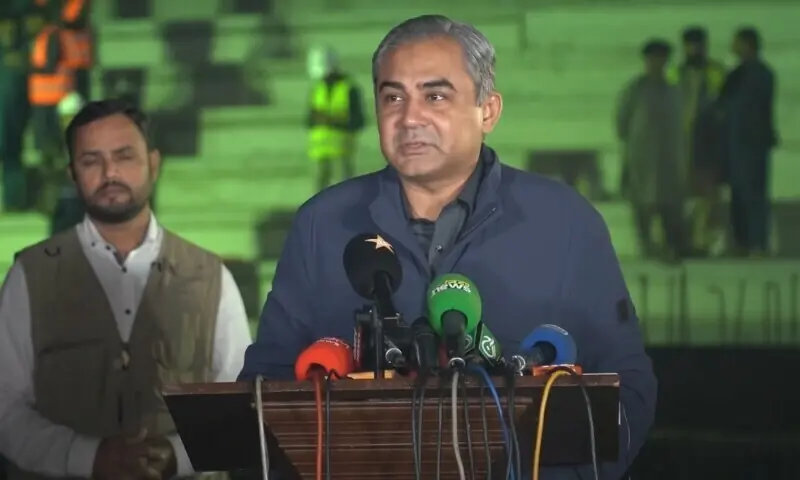
The political landscape in Pakistan has reached a new level of volatility following Interior Minister Mohsin Naqvi’s pointed remarks regarding the ambitions of opposition leadership. Speaking to reporters in Lahore on Friday, Naqvi alleged that a high-profile political party head—widely interpreted as Jamiat Ulema-i-Islam-Fazl (JUI-F) chief Maulana Fazlur Rehman—had lobbied for the governorship of Khyber Pakhtunkhwa (KP). According to Naqvi, the individual’s current vocal opposition to the federal government’s recent actions in the province is less a matter of principle and more a consequence of personal disappointment regarding his exclusion from the new administrative setup.
This public confrontation marks a significant departure from standard political rhetoric, signaling that the federal government is moving to discredit its critics by exposing alleged behind-the-scenes negotiations. By framing the opposition’s criticism as a reaction to personal rejection rather than genuine policy concerns, the Interior Minister is attempting to isolate key figures like Fazlur Rehman. The situation remains precarious, as the federal government struggles to justify the imposition of governor’s rule in KP, a move that has drawn fire not just from the PTI, but from a coalition of opposition voices who view the action as an unconstitutional power grab.
Key Developments & Policy Breakdown
- Governor’s Rule Imposed: The federal government formally invoked emergency powers in KP, citing the provincial government’s failure to engage in counterterrorism efforts and maintain law and order.
- Allegations of Patronage: Minister Naqvi accused the unnamed opposition leader of having a career defined by dependence on the establishment, including claims that the state previously facilitated logistics and travel for his party.
- Mediation Failure: Efforts by Maulana Fazlur Rehman to act as a bridge between the federal government and the PTI regarding Imran Khan’s legal status and protest movements appear to have completely collapsed.
- Resource Control: The federal government has moved to centralize control over resources in the former tribal areas, a decision that has sparked significant backlash from local leaders who argue the move bypasses provincial autonomy.
- Public Rebuttal: Punjab Chief Minister Maryam Nawaz joined the fray via social media, accusing Fazlur Rehman of facilitating entities that she claims are responsible for the degradation of security and governance in KP.
In-Depth Analysis & Real-World Impact
The current standoff represents a critical failure of the traditional political mediation model in Pakistan. For decades, figures like Fazlur Rehman served as essential conduits between the civilian government and the military establishment, often negotiating power-sharing agreements that kept the system stable. The breakdown of this relationship suggests that the established mechanisms for managing political dissent are no longer functioning. If the federal government continues to use administrative tools like governor’s rule to neutralize provincial opposition, it risks creating a long-term governance vacuum that could be exploited by militant groups currently operating in the border regions.
Furthermore, the economic implications of this instability are profound. Investors and international donors are increasingly wary of the lack of a clear, unified policy direction in KP. The region requires consistent administrative focus to manage its security challenges and infrastructure development. Instead, the current political infighting has paralyzed the local bureaucracy, leaving critical initiatives—particularly those concerning the integration of the former tribal districts—in a state of limbo. The shift toward centralization suggests a hardening of the federal stance that could alienate local populations, potentially fueling further civil unrest in an already fragile region.
Background, Preceding Events & Historical Context
The roots of this crisis extend back to the 2018 merger of the Federally Administered Tribal Areas (FATA) into Khyber Pakhtunkhwa. While the 25th Constitutional Amendment was hailed as a milestone for integration, the implementation has been plagued by disputes over resource allocation, administrative oversight, and the role of the provincial government. Fazlur Rehman’s party had expressed early reservations about the process, arguing that the tribal population was not adequately consulted, a narrative he continues to leverage to challenge federal authority today.
This tension was exacerbated by the recent electoral cycle and the detention of former Prime Minister Imran Khan. The subsequent protest marches and the federal government’s aggressive response created a deadlock that required third-party intervention. When those mediation efforts failed, the federal government resorted to the nuclear option of governor’s rule, claiming the PTI-led provincial government was intentionally disengaging from the fight against terrorism. This historical pattern of political maneuvering—where administrative measures are used to address political grievances—has consistently resulted in weakened provincial institutions and a lack of accountability for the security failures that plague the region.
“"The imposition of governor's rule is not merely an administrative shift; it is a fundamental challenge to the federalist structure, risking the alienation of provincial stakeholders at a time when regional security demands absolute unity."”
Strategic Outlook & What to Watch Next
In the coming weeks, the primary metric for success will be the restoration of law and order in KP. Should the federal government fail to demonstrate a marked improvement in the security environment under its direct rule, the legitimacy of the emergency measures will be further eroded, potentially emboldening the opposition to form a broader, more unified front against the center. Observers should monitor the legal challenges being filed in the courts regarding the constitutionality of the intervention; a judicial rebuke could force a rapid and potentially chaotic reversal of the current policy.
Additionally, the internal dynamics of the opposition are worth watching. If the rift between the PTI and traditional power brokers like the JUI-F deepens, the government may find it easier to manage the protests in the short term. However, a total collapse of the dialogue process leaves few options for a peaceful resolution to the political crisis. The government must now decide whether to move toward a negotiated reconciliation or to continue its strategy of confrontation, a path that carries significant risks for the stability of the entire federation.
Quik News synthesizes verified facts across international press reporting. Original reporting belongs to the attributed outlets above.


