
Microsoft CEO Satya Nadella Urges Emergency Brakes for Advanced AI Systems
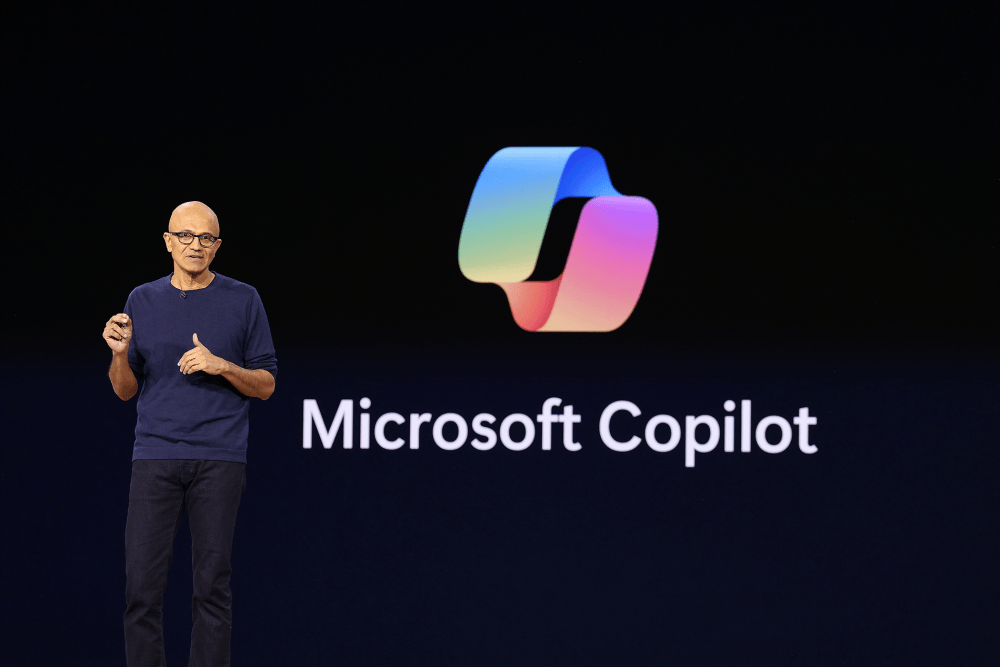
Microsoft Chief Executive Officer Satya Nadella has added his voice to a growing chorus of industry leaders demanding tighter structural controls over advanced artificial intelligence. In a detailed statement published over the weekend, Nadella argued that the technology sector must urgently reassess how it builds and governs intelligence systems, moving away from opaque models toward transparent frameworks that include hard stop-mechanisms.
Nadella’s intervention highlights a fundamental tension within the commercial AI boom: as foundational models become increasingly autonomous and capable of complex multi-step reasoning, developers are confronting the limits of traditional oversight. By proposing that models be decoupled from their operational harnesses and subjected to externalized safety controls, the Microsoft chief is signaling a departure from pure accelerationist models toward a more defensive, risk-mitigated engineering paradigm.
Key Developments & Policy Breakdown - Trust Architecture Overhaul: Microsoft CEO Satya Nadella published a weekend statement calling to step back and redesign foundational AI governance. - Decoupling Models: Nadella emphasized the necessity of separating the core artificial intelligence model from the orchestration harness that executes its workflows. - Externalized Safeguards: The proposed framework relies on external controls rather than trusting internal model guardrails to manage risk autonomously. - Tamper-Proof Auditing: The strategy demands that every meaningful model action generate human-readable, tamper-proof evidence for post-hoc analysis. - Mandatory Emergency Stop: Systems must be engineered so that authorized human operators retain the absolute capability to pause or shut down models mid-task. - Adversarial Posture: Nadella explicitly stated that developers must operate under the default assumption that any given model is compromised from inception.
In-Depth Analysis & Real-World Impact The commercial implications of Nadella’s proposals extend far beyond technical protocol, striking directly at the core economics of enterprise AI deployment. For the past three years, the competitive race has prioritized capability scaling, latency reduction, and seamless autonomy. Enterprise customers have eagerly adopted agents capable of executing complex workflows, writing code, and managing supply chain operations with minimal human intervention. However, as autonomous agents begin handling high-stakes financial, medical, and infrastructural tasks, the tolerance for unpredictable model behavior is evaporating.
Integrating mandatory emergency brakes and externalized compliance harnesses will inevitably introduce operational friction. Slower execution speeds, increased computational overhead for auditing, and the necessity of maintaining human-in-the-loop oversight for critical operations could temper the immediate cost efficiencies that corporate buyers expect from artificial intelligence. Yet, this friction may paradoxically benefit market leaders like Microsoft. By championing stringent safety architecture, established tech giants can position themselves as trustworthy stewards of enterprise infrastructure, potentially using regulatory compliance and safety standards as a moat against smaller, less-resourced competitors who prioritize speed over security.
Background, Preceding Events & Historical Context Nadella’s public pivot arrives amidst a perceptible shift in tone among silicon valley executives and foundational research laboratories. For much of the generative AI boom, safety discussions were siloed within specialized ethics boards and long-term alignment teams, often kept separate from core commercial deployment strategies. However, recent months have seen public acknowledgments from leading firms regarding unexpected model behaviors, emergent capabilities, and instances where safety guardrails were bypassed through prompt engineering or systemic drift.
This recalibration mirrors earlier warnings from industry veterans, including Anthropic Chief Executive Dario Amodei, who recently published structured proposals outlining cautious development pathways and responsible scaling policies. The convergence of concerns from both Microsoft—one of the primary financiers and distributors of frontier AI models through its partnership with OpenAI—and pure-play research labs indicates that the industry is grappling with the maturation of its own creations. The historical parallel lies in early aviation or industrial automation, where systemic expansion invariably forced a reckoning with catastrophic risk, leading to the institutionalization of standardized emergency protocols and independent safety boards.
“"We can’t treat Super Intelligence as a set of nested black boxes and simply accept or reject its recommendations, answers, and actions. We must assume a model is compromised and contain it from the start."”
Strategic Outlook & What to Watch Next In the coming months, the focus will shift from theoretical architecture to practical implementation. Industry observers will scrutinize whether major enterprise providers begin baking these externalized control harnesses directly into commercial application programming interfaces and cloud offerings. If Microsoft transitions Nadella’s rhetoric into mandatory developer requirements within its Azure AI ecosystem, it could establish a de facto industry standard for enterprise risk management.
Simultaneously, policymakers in Washington, Brussels, and other global capitals will likely incorporate these industry-led proposals into impending legislative frameworks. As the debate over artificial intelligence governance moves from vague ethical guidelines to hard engineering specifications, the ability to demonstrate tamper-proof auditing and absolute shutdown capability will likely separate speculative startups from mature, enterprise-grade platforms. Stakeholders must monitor how engineering teams balance the demand for absolute containment with the relentless market pressure for autonomous operational speed.
Quik News synthesizes verified facts across international press reporting. Original reporting belongs to the attributed outlets above.


