
John Deere's Self-Repair Push Faces Heavy Skepticism From Farmers
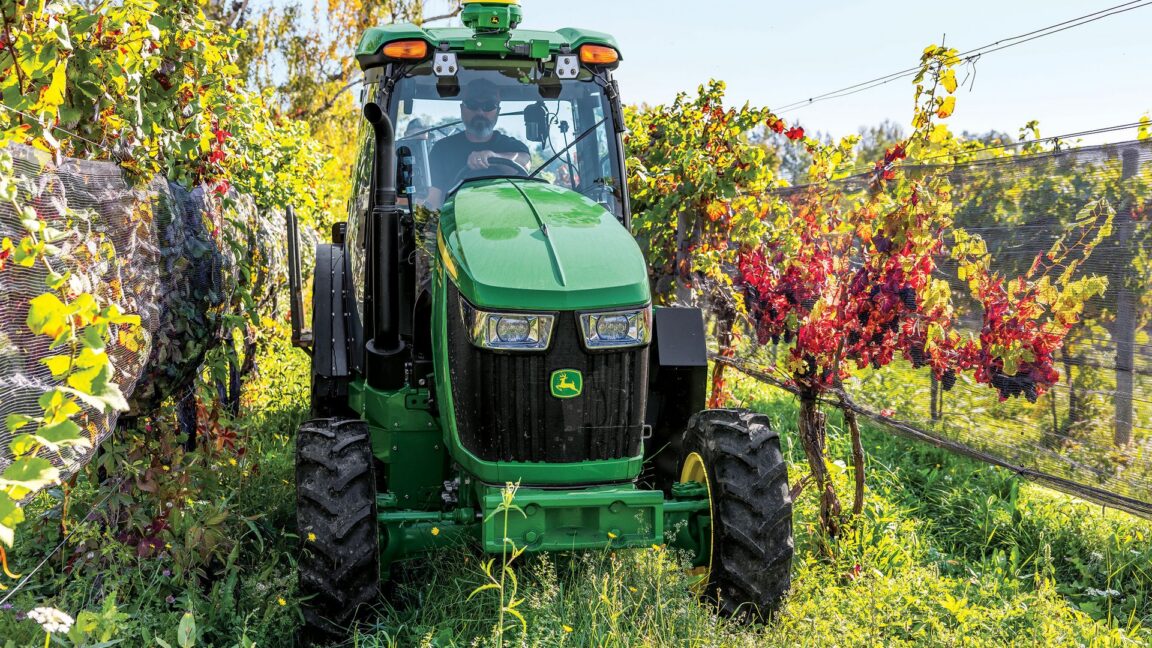
In an effort to counter years of regulatory pressure and public pushback from the right-to-repair movement, John Deere has deployed a new software suite, Operations Center Pro Service, designed to allow equipment owners to diagnose and fix their own machinery. The system, launched in 2025, links laptops directly to tractors, combines, and sprayers, pulling user manuals and step-by-step diagnostic workflows matched to a machine's specific serial number. For simple component failures—such as a disconnected water-in-fuel sensor—the interface offers immediate clarity, permitting users to clear fault codes without calling a dealership technician.
However, behind the polished corporate demonstrations, America's agricultural community remains overwhelmingly unconvinced. Senior executives at the Moline, Illinois-based manufacturing giant, including Chief Technology Officer Jahmy Hindman, contend that the self-repair platform reflects a long-standing commitment to customer autonomy. Yet across the nation's roughly 1.8 million farms, adoption remains miniscule, with John Deere reporting roughly 1,000 daily active users a year after launch. Operators argue that the software handles rudimentary fixes while leaving complex, multi-code electronic failures locked behind proprietary barriers.
The divide highlights a fundamental clash between modern industrial design and traditional farm management. As tractors have transformed from mechanical workhorses into rolling computer networks equipped with up to 50 individual electronic control units, 4G connectivity, and autonomous navigation tools, independent maintenance has become a battleground. For farmers operating on tight seasonal windows, the debate over who controls diagnostic access is not merely technical—it directly impacts operational survival and farm profitability.
Key Developments & Policy Breakdown - Software Access Tiering: John Deere’s Operations Center Pro Service starts at an annual base fee of $195 per individual machine, with comprehensive fleet-wide diagnostic packages running up to $5,995 annually for agricultural and turf service operations. - Low Adoption Metric: Despite an operational pool of millions of machines across North America, John Deere acknowledges that its self-repair software currently averages only around 1,000 daily active users. - Legal Settlements Pending: The corporate self-repair rollout follows a $99 million class-action settlement agreement with equipment owners over inflated repair costs, alongside a separate enforcement settlement with the U.S. Federal Trade Commission (FTC). - Diagnostic Software Limitations: Farmers point out that while the platform resolves straightforward isolated faults, it struggles with complex multi-code failures that require deep-level diagnostic trees historically reserved for official dealer technicians. - Gray Market Alternatives: Due to recurring subscription costs and feature restrictions, multiple operators report that agricultural workers continue to utilize cracked, unofficial software versions to bypass official digital lockouts.
In-Depth Analysis & Real-World Impact The economic calculus for contemporary agricultural operators leaves little room for repair delays. During peak planting or harvesting windows, a single stalled tractor can cost a farm tens of thousands of dollars per day in missed yield. While John Deere markets Pro Service as an intuitive tool equipped with offline functionality, custom diagnostic history tracking, and direct e-commerce links for replacement parts, critics argue that the platform fails to deliver parity with the diagnostic software provided to official dealerships. When multiple fault codes trigger simultaneously, farmers are left sorting through complex decision trees without access to real-time internal engineering updates or comprehensive Product Improvement Plans (PIPs).
This operational friction has fueled deep-seated distrust within the agricultural sector. Rather than subscribing to Deere’s tiered pricing structures, an increasing number of independent mechanics and farm managers rely on gray-market diagnostic tools acquired online. Advocates point out that the company’s revenue model remains heavily tied to Wall Street expectations and dealer network profitability, creating an inherent conflict of interest when granting full repair autonomy to end-users. As a result, the self-repair tool is viewed by many not as a generous concession, but as a calculated corporate attempt to satisfy regulatory bodies while maintaining control over high-margin service channels.
Background, Preceding Events & Historical Context The friction surrounding John Deere’s repair policies has been building for over a decade as agricultural equipment transitioned toward digital integration. Early iterations of computerized tractors relied on basic diagnostic trouble codes, but modern units feature complex digital rights management systems. These software locks prevent unauthorized part swaps and require dealer-level digital recalibration even for standard component replacements. The resulting dynamic forced farmers to wait days for dealer technicians to travel out to rural fields, incurring substantial call-out fees and costly downtime.
This escalating frustration culminated in class-action lawsuits accusing the equipment maker of anti-competitive behavior and monopolizing the repair market. Parallel investigations by federal regulators prompted the FTC to step in, pressing Deere to open up technical documentation and software access. Although the company agreed to pay $99 million to settle owner claims without admitting wrongdoing, repair advocates insist that corporate concessions remain cosmetic. They argue that structural changes in equipment service will only occur when legal mandates permanently outlaw software locks that block independent maintenance.
“"This is an issue concerning agricultural equipment, but it is really the vanguard of a much bigger and persistent problem that affects every aspect of our society."”
Strategic Outlook & What to Watch Next Looking ahead, the ultimate success of John Deere's self-repair framework depends on pending judicial approvals for its federal and class-action settlements. Judges presiding over the cases must determine whether the provisions built into Operations Center Pro Service satisfy legal remedies for fair competition and owner access. Concurrently, Deere is attempting to enhance user experience by integrating generative artificial intelligence tools—such as its "JD" digital assistant—to simplify manual searches and structural schematics, though it remains to be seen whether AI integration will address core diagnostic limitations.
Industry analysts and consumer advocacy groups will be watching daily active user metrics and gray-market software usage to gauge whether farm operators eventually embrace official channels. Beyond the agricultural sector, the outcomes established in this conflict will set critical legal and regulatory precedents for other heavy machinery, automotive, and consumer electronics industries. If agricultural repair mandates fail to grant full diagnostic parity, manufacturers across multiple sectors will likely replicate restricted self-repair models that protect central control over post-sale maintenance ecosystems.
Quik News synthesizes verified facts across international press reporting. Original reporting belongs to the attributed outlets above.